Functional Neurological Disorder (FND) Therapy in Cypress, TX
Functional Neurological Disorder (FND) Counseling in Cypress, TX
Functional Neurological Disorder (FND) Therapy in Cypress, TX
Your symptoms are real. Your experience matters. And there is hope.
When Your Brain and Body Aren't Communicating the Way They Should
One day, you're going about your life as usual. The next, your body starts doing things you can't explain. Maybe your hands are shaking, your legs suddenly feel weak, or you're experiencing episodes that look like seizures. Perhaps you're struggling to walk, speak, concentrate, or even get through the day without feeling completely exhausted.
You've seen doctors. You've had tests. Maybe you've even been told that everything looks "normal."
But nothing about what you're experiencing feels normal.
And the worst part? You may have started wondering whether anyone actually believes you.
We believe you.
Functional Neurological Disorder (FND) is a real neurological condition that affects how your brain and body communicate. Your symptoms aren't imaginary, you're not making them up, and you can't simply decide to make them stop.
At Youngs Counseling in Cypress, TX, we understand that living with unexplained or unpredictable neurological symptoms can be frightening, frustrating, and downright exhausting. Our goal is to help you better understand the connection between your brain and body, develop practical strategies for managing symptoms, and work toward reducing or eliminating symptoms whenever possible.
What Is Functional Neurological Disorder (FND)?
Functional Neurological Disorder, sometimes called functional neurological symptom disorder and formerly known as conversion disorder, occurs when the nervous system has difficulty sending, receiving, or processing signals correctly.
Think of your brain like a computer. The hardware may be intact, but the software isn't communicating properly. The computer is still there, but certain programs aren't running the way they're supposed to.
FND works somewhat similarly.
The problem isn't necessarily damage to the brain's structure. Instead, it's a disruption in how neurological networks function and communicate.
This distinction matters because FND is not the same as pretending to be sick, and it is not simply a psychological problem.
Although stress, trauma, or emotional experiences may contribute to symptoms in some individuals, others develop FND without any identifiable psychological trigger.
There isn't one single cause, and there certainly isn't one single explanation that fits everyone.
Common Symptoms of FND
FND can look very different from one person to another. Some individuals experience symptoms intermittently, while others struggle with persistent difficulties that interfere with work, relationships, and daily activities.
Common symptoms include:
Movement difficulties: Tremors, muscle spasms, involuntary movements, weakness, paralysis, or difficulty walking.
Functional seizures: Episodes resembling epileptic seizures that are not caused by epileptic electrical activity.
Sensory changes: Numbness, tingling, altered sensation, or visual disturbances.
Speech difficulties: Stuttering, changes in voice, or difficulty producing speech.
Cognitive difficulties: Problems with attention, concentration, memory, or processing information.
Associated symptoms: Chronic fatigue, pain, dizziness, and sleep disturbances.
Symptoms can fluctuate, sometimes dramatically. You may feel relatively normal one day and struggle with basic activities the next.
That unpredictability can be one of the most challenging aspects of living with FND.
Is FND All in Your Head?
Let's clear something up.
FND involves the brain, but that doesn't mean your symptoms are imaginary.
For years, individuals experiencing functional neurological symptoms were often misunderstood. Some were told their symptoms were psychological, stress-related, or simply something they needed to get over.
Unfortunately, those explanations frequently left people feeling dismissed rather than helped.
We now understand that FND involves changes in how the nervous system functions, including networks responsible for movement, sensation, attention, and the experience of control over the body.
Your brain and body are constantly communicating. Much of that communication happens automatically, without your conscious awareness.
When those processes become disrupted, symptoms can occur even when conventional imaging doesn't reveal structural damage.
And no, you cannot simply think your way out of it.
However, the brain also has an incredible capacity to learn, adapt, and reorganize how it functions. This ability, known as neuroplasticity, is one reason rehabilitation and appropriate therapeutic interventions can be beneficial.
What Causes Functional Neurological Disorder?
There is no single known cause of FND.
For some people, symptoms begin following an illness, injury, surgery, or significant life event. For others, symptoms appear gradually or seemingly out of nowhere.
Potential contributing factors may include:
Physical injury or illness
Changes in nervous system functioning
Persistent pain or fatigue
Heightened physiological arousal
Stress or overwhelming life experiences
Previous neurological conditions
Trauma or emotional distress in some individuals
Importantly, you do not have to have a history of trauma, anxiety, or depression to develop FND.
While emotional and physiological stress can influence neurological functioning, FND is not simply a physical manifestation of unresolved psychological problems.
Understanding your individual experience, rather than assuming what caused it, is an important part of developing an appropriate treatment plan.
Can Functional Neurological Disorder Be Treated?
Yes. FND is treatable, and significant improvement is possible.
If you've been told that you simply have to learn to live with your symptoms, you may be surprised to learn that some individuals experience substantial improvement or even complete resolution of their symptoms with appropriate treatment.
At Youngs Counseling, Dawn-Petrice Youngs, MA, LPC-S, has successfully treated individuals with Functional Neurological Disorder using psychotherapy, with clients experiencing outcomes ranging from meaningful symptom reduction to complete resolution of symptoms.
Her clinical experience working with individuals experiencing FND, and witnessing the changes possible through psychotherapy, sparked a desire to better understand the complex relationship between the brain, nervous system, and behavior. This curiosity, in part, led her to pursue a PhD in Applied Psychophysiology at Saybrook University, where she is currently completing her dissertation. Her doctoral research focuses on changes in brain activity following individualized EEG-driven neurofeedback, further expanding her understanding of the brain's capacity to adapt and change.
This combination of clinical experience and continued academic research reflects her commitment to understanding not only how symptoms develop and persist, but also how therapeutic interventions may support meaningful improvements in functioning.
While everyone's experience with FND is different, these clinical outcomes reinforce an important point: an FND diagnosis does not automatically mean a lifetime of symptoms.
Our approach focuses on understanding how your nervous system functions, identifying factors that may contribute to or perpetuate symptoms, and helping your brain and body develop more effective patterns of responding.
Rather than simply teaching you how to cope with symptoms, our goal is to help reduce or eliminate them whenever possible.
Our Approach to Treating Functional Neurological Disorder
At Youngs Counseling, we don't believe in a one-size-fits-all approach to treatment. Two people may share the same diagnosis but have very different symptoms, experiences, and contributing factors.
That's why treatment begins with understanding you, not just your diagnosis.
Psychotherapy for FND
Psychotherapy can play an important role in treating Functional Neurological Disorder. However, that doesn't mean your symptoms are imaginary or that an emotional problem must be causing them.
The brain is involved in everything we experience, including movement, sensation, attention, emotions, and the body's automatic responses. These processes are interconnected, and changes in one system can influence how others function.
Through individualized psychotherapy, we work to identify patterns that may contribute to symptom development or persistence, address symptom-related fear and avoidance, improve self-regulation, and support the brain's ability to develop more functional responses.
Depending on your needs, treatment may incorporate cognitive behavioral strategies, attention and behavioral retraining, relaxation techniques, and other appropriate therapeutic interventions.
When trauma, anxiety, or significant life stressors are relevant, we can address those concerns as well. However, we don't assume that everyone with FND has unresolved trauma or an underlying psychological disorder.
Our goal is not simply to help you live with FND. It's to help you regain functioning, reduce symptoms, and get back to living your life.
Parent Support and Coaching for FND
When a child or teenager develops FND, the entire family can feel the impact.
Watching your child experience seizures, tremors, weakness, difficulty walking, or other unexplained neurological symptoms can be frightening. As a parent, your natural instinct is to protect your child, prevent discomfort, and do whatever you can to make the symptoms stop.
But sometimes, despite the very best intentions, the ways families respond to symptoms can unintentionally make recovery more difficult.
That doesn't mean parents caused FND or are responsible for their child's symptoms.
It means that understanding how the nervous system responds to attention, expectations, behaviors, and environmental factors can help families become an important part of the recovery process.
At Youngs Counseling, parent support and coaching focuses on helping families:
Understand FND: Learn what's happening in the nervous system and why symptoms are real, even when medical testing doesn't identify structural damage.
Respond to symptoms effectively: Develop calm, supportive responses that acknowledge the child's experience without unintentionally increasing symptom-focused attention or avoidance.
Encourage independence: Help children gradually return to age-appropriate responsibilities, school, social activities, and daily routines.
Recognize patterns: Identify situations, behaviors, or environmental factors that may contribute to symptom fluctuations without assuming that every symptom has a psychological trigger.
Balance support with expectations: Learn when to provide assistance, when to encourage participation, and how to avoid creating unnecessary limitations.
Build confidence: Help children recognize their abilities, develop self-regulation skills, and regain trust in their bodies.
Parent coaching may also involve collaborating with schools and other healthcare professionals to develop consistent, realistic expectations that support recovery.
Our goal isn't to teach parents to ignore their child's symptoms or push them beyond their capabilities. It's to help families respond in ways that promote safety, confidence, appropriate activity, and independence.
Sometimes helping your child means learning when to step in—and when to step back.
EEG-Driven Neurofeedback for FND
At Youngs Counseling, we also incorporate EEG-driven neurofeedback through our affiliated practice, Neurofeedback of Cypress, when appropriate.
Neurofeedback is a noninvasive form of brain training that uses real-time EEG information to provide feedback about brain activity. Through repeated training, individuals practice modifying specific patterns of brain activity using feedback and reinforcement.
Because FND involves disruptions in how neurological networks function, neurofeedback may be considered as a complementary intervention within an individualized treatment plan.
Unlike approaches that apply the same training protocol to everyone, our neurofeedback services begin with a quantitative EEG (qEEG) assessment to help guide individualized training decisions.
Although our practice has incorporated neurofeedback when working with clients experiencing FND, research specifically supporting EEG-driven neurofeedback as an effective FND treatment remains limited. It is not currently considered an established first-line intervention for the disorder.
Neurofeedback may be used alongside psychotherapy and other recommended medical or rehabilitative treatments, depending on the individual's needs.
Learn more about Neurofeedback of Cypress at www.nfbofcypress.com.
Helping the Brain and Body Work Together
One of the most frustrating aspects of FND is feeling as though you've lost control over your own body.
Movements that used to happen automatically may suddenly require tremendous effort. Symptoms may appear without warning, and attempts to consciously control them can sometimes make things worse.
Treatment focuses on helping you understand these patterns and develop different ways of responding.
Depending on your symptoms and needs, this may involve reducing excessive symptom monitoring, changing unhelpful behavioral patterns, improving physiological regulation, and gradually rebuilding confidence in activities that have become difficult.
For children and adolescents, this process often includes helping parents and caregivers reinforce progress, support appropriate activity, and encourage increasing independence.
The brain has a remarkable capacity to adapt and learn. This process, known as neuroplasticity, is one of the principles underlying neurological rehabilitation.
While recovery isn't always straightforward or predictable, meaningful changes are possible.
FND Treatment Is Not One-Size-Fits-All
Effective FND treatment often involves collaboration between several healthcare professionals.
Depending on your symptoms, your treatment team may include a neurologist, physical therapist, occupational therapist, speech-language pathologist, and mental health professional.
A neurologist familiar with FND can identify positive clinical signs that support the diagnosis. Importantly, FND should not be diagnosed simply because an MRI, EEG, or other medical test comes back normal.
Counseling can complement neurological care and rehabilitation by helping you address symptom-related distress, develop self-regulation skills, modify patterns that may contribute to symptom persistence, and work toward improved daily functioning.
At Youngs Counseling, we value collaboration with other healthcare providers because the best treatment plan is one that considers the whole person.
Frequently Asked Questions About FND
Is Functional Neurological Disorder a mental illness?
FND is a neurological condition involving changes in nervous system functioning. Although it has historically been classified within psychiatric diagnostic systems, current clinical understanding recognizes the complex interaction between neurological, biological, psychological, and social factors. Having FND does not automatically mean someone has a psychiatric disorder.
Can FND symptoms go away?
Yes. Some individuals experience substantial improvement or complete resolution of symptoms, while others continue to experience symptoms over time.
At Youngs Counseling, Dawn-Petrice has worked with clients who experienced meaningful symptom reduction or complete symptom resolution following psychotherapy. However, individual outcomes vary, and no particular result can be guaranteed.
Is FND caused by anxiety or trauma?
Not necessarily. Anxiety, trauma, and stress may contribute to symptoms in some individuals, but many people with FND do not have an identifiable psychological trigger. Neither trauma nor a mental health diagnosis is required for FND to develop.
Can counseling help if my symptoms are neurological?
Yes. Psychotherapy can be an important part of FND treatment. It may help individuals address patterns that contribute to symptom persistence, improve physiological regulation, reduce symptom-related fear and avoidance, and restore daily functioning.
For certain FND presentations, particularly functional seizures, psychological therapies are an important component of treatment.
How can parents help a child with FND?
Parents can play an important role in their child's recovery by learning about FND, responding calmly to symptoms, encouraging appropriate activity, and helping their child gradually regain independence.
Parent support and coaching can help families establish consistent responses and expectations while maintaining appropriate medical care and safety precautions.
Does neurofeedback help with FND?
EEG-driven neurofeedback is a brain-training intervention that may be considered as a complementary approach for selected individuals. Youngs Counseling incorporates neurofeedback through Neurofeedback of Cypress when clinically appropriate.
However, research specifically examining neurofeedback for FND remains limited, and it is not currently an established first-line treatment.
Do I need to see a neurologist before starting counseling?
If you are experiencing unexplained neurological symptoms, a medical evaluation is important. FND should be diagnosed by a qualified healthcare professional familiar with the condition.
Counseling can then be incorporated into a broader treatment plan when appropriate.
How long does FND treatment take?
There is no universal timeline. Some individuals benefit from relatively brief interventions, while others need ongoing multidisciplinary support.
Treatment recommendations depend on your symptoms, goals, medical history, and progress.
Can FND occur alongside another neurological condition?
Yes. Having FND does not rule out other neurological conditions. Individuals may experience FND alongside epilepsy, migraine, multiple sclerosis, or other medical conditions, making appropriate neurological assessment particularly important.
There Is Hope Beyond an FND Diagnosis
If you're living with Functional Neurological Disorder—or you're a parent watching your child struggle with it—you've probably already spent more time than you'd like trying to understand what's happening.
Maybe you've been dismissed, misunderstood, or told that nothing more can be done.
But an FND diagnosis doesn't have to be the end of the conversation.
At Youngs Counseling, we've worked with individuals who have experienced significant reductions in symptoms, including clients whose symptoms have completely resolved following psychotherapy.
We understand that these outcomes aren't guaranteed, and every person's treatment journey is different. But we also know from clinical experience that improvement is possible.
For families, that means working together to create an environment that supports recovery while helping children and adolescents regain confidence, independence, and participation in everyday life.
You are not your diagnosis, and your current symptoms don't necessarily determine your future.
If you're ready to explore treatment options for yourself or your child, contact Youngs Counseling to learn more about our individualized approach to FND.
Functional Neurological Disorder Counseling in Cypress, TX
Youngs Counseling serves individuals and families throughout Cypress, Hockley, Tomball, Waller, Katy, and Northwest Houston.
We offer in-person counseling at our Cypress office and secure online counseling for clients throughout Texas.
Ready to take the next step?
Contact us today to schedule a consultation. We'll discuss your concerns, answer your questions, and help determine whether our services are an appropriate fit for your needs.
Youngs Counseling
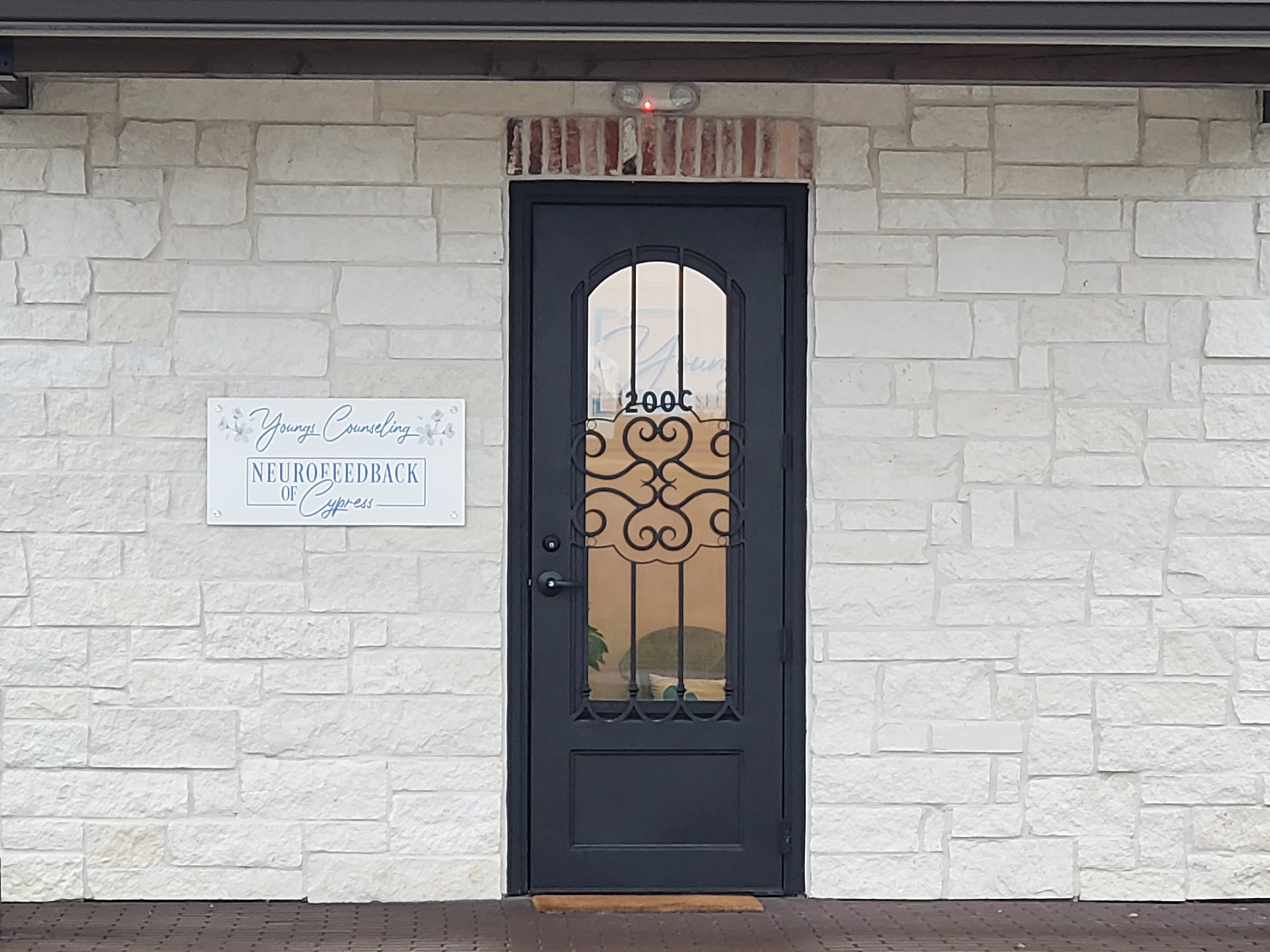
16712 Huffmeister Rd., Bldg. 200C
Cypress, TX 77429
Phone: (281) 315-0386
Email: therapist@youngscounseling.com
FND treatment should be coordinated with appropriate medical professionals. Counseling does not replace neurological evaluation, medical care, or specialized physical rehabilitation. Individual treatment outcomes vary.
Contact us today to schedule your first session and begin your journey toward a calmer, more fulfilling life.
Location and Services
We offer in-person sessions at our office in Cypress, TX and secure virtual therapy sessions for clients throughout Texas.
Click here to schedule your free 15-minute phone consultation for anxiety therapy in Cypress. Our other specialties include ADHD/ADD & behavior concerns, ASL therapy, children & adolescents, couples, counselor supervision, families, and neurofeedback therapy.